


The company should make every effort to ensure adequate and effective protective equipment. For its application, he is going to use one or preferably several of the following means.
 | Protection by distance: avoid involuntary exposure by distance from sources. |
| Protection by armor. |
| Protection of workrooms by screens. |
| Protection by limiting exposure times. |
| Placement of warning signs: these signs may vary in size depending on where they are to be placed, but must be given the proportions shown below at all times. |

 | The warning sign must appear at every entrance to the controlled area, and on every device that emits ionizing radiation. |
| Below the warning sign must appear, visibly and legibly, any additional information intended to warn persons entering the area of the dangers they may face. |
Personal protective equipment in radiology:


| Lead apron | |
| | Apron Wrap Apron | |
| Thyroid Protection | |
| Lead gloves | |
| Glasses with lead glass to protect the lens of the eye |


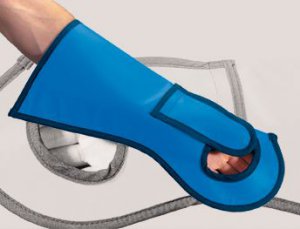
Personal protection for the patient:
| Possibly a lead apron |
| Gonad protection (protection of the sexual organs). |
| Minimum dose (ALARA principle). |
Measurement of doses:
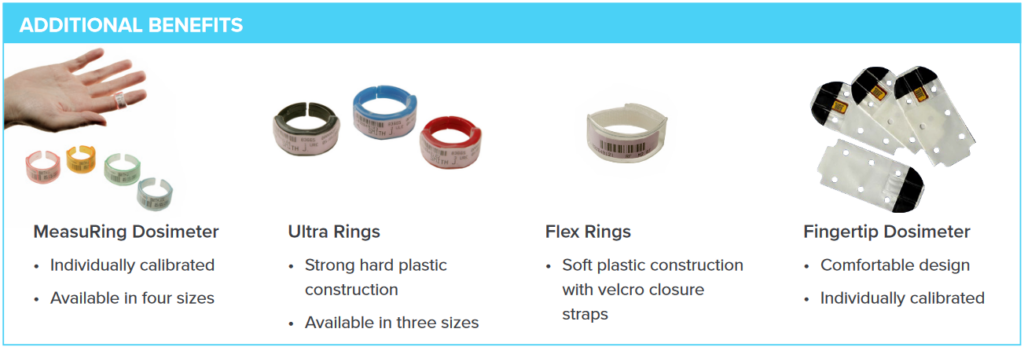
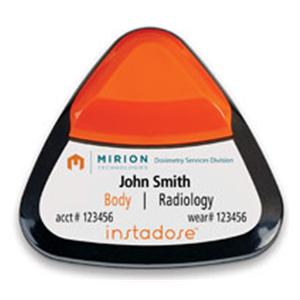
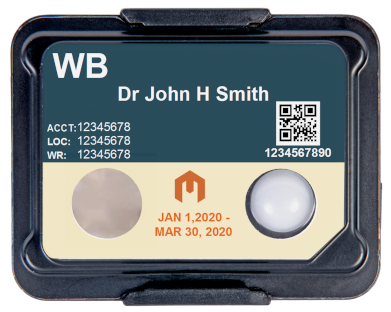
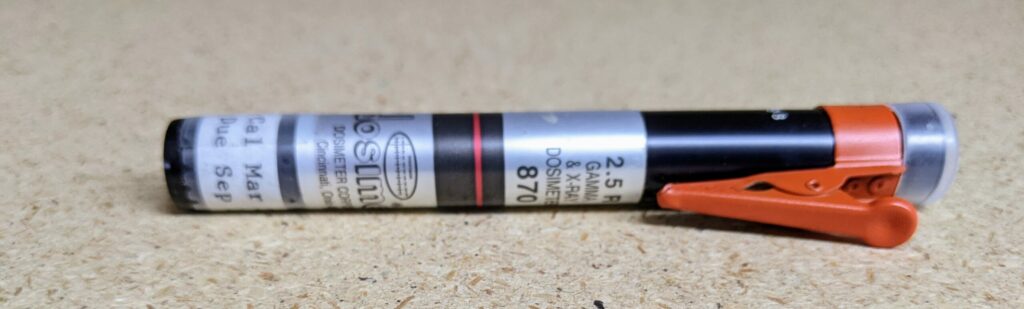
Each worker exposed to radiation will wear a dosimeter at chest level. This dosimetry is organized by the employer who also stands to pay for it. The results are read by an accredited dosimetry service.
If there is a risk of a particular body part receiving a higher dose then an additional dosimeter is provided that takes measurements at that particular location.
If the activities one performs require a lead apron, one will wear at least two dosimeters, one below and one above the apron.
Each employee has access to dose data pertaining to him.
Specific Provisions for Medical Application of Ionizing Radiation:
For any medical exposure, one will always weigh the direct medical benefit and societal benefit against any harm the exposure will cause. One considers here the effectiveness, benefits and possible risks associated with other techniques that require less or even no exposure to ionizing radiation.
Similarly, the exposure of persons who knowingly and voluntarily, but not professionally, assist and support other persons subject to medical exposure must be adequately weighed so that the results that the research or treatment has do not encourage needless exposure.
If pregnancy cannot be ruled out, particular attention should be paid to justification in function of medical exposure, especially with regard to the abdomen and pelvic region, especially to high penetration and optimization of exposure.
Certainly here the ALARA principle applies, so the dose will be kept as low as reasonably achievable. The goal is to obtain diagnostically sufficient information.