


 |  |  |
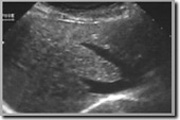
Using ultrasound, one can examine any tissue in the body provided it is not “hidden” behind bone or air, for example. The main advantage of ultrasound is that it is non-invasive. It basically does not hurt.
Indications:
 | As an adjunct to a clinical trial |
| If and suspected of a muscle or tendon injury |
| To objectify the blood supply of a given structure |
| To detect fluid collections (vbn. cyst, hemorrhage,…) |
| To assess the shape and size of internal organs (viz. spleen, liver, pancreas, kidneys, appendix,…) |
| Monitoring fetal growth during pregnancy |
Preparation:
Except for examination of the abdomen where one must be able to assess the bladder, no specific preparation is necessary.
When assessing the bladder, it is important that it is full.
Aftercare :
Specific aftercare is going to be required.