


What does the law say in Belgium:
The legislation currently in force is dated July 20, 2001. This, in turn, is based on the Royal Decree of April 25, 1997.
In it, one can find the following guidelines:
Under no circumstances should the dose exceed the imposed limit (see below)

- Maximum dose limit
- Before actions are licensed, they must be justified by the benefits they provide
- Before actions are licensed, they must be justified by the benefits they provide
- The regulations do not apply to individuals who are subjected to medical examinations or treatments, albeit these actions must be medically sound
- Also persons who voluntarily help and support patients during a study. However, they should be adequately shielded and the dose kept as low as reasonably achievable.
- Finally, individuals who voluntarily participate in medical or biomedical research programs if adequately informed are also not subject to these regulations.
Important:
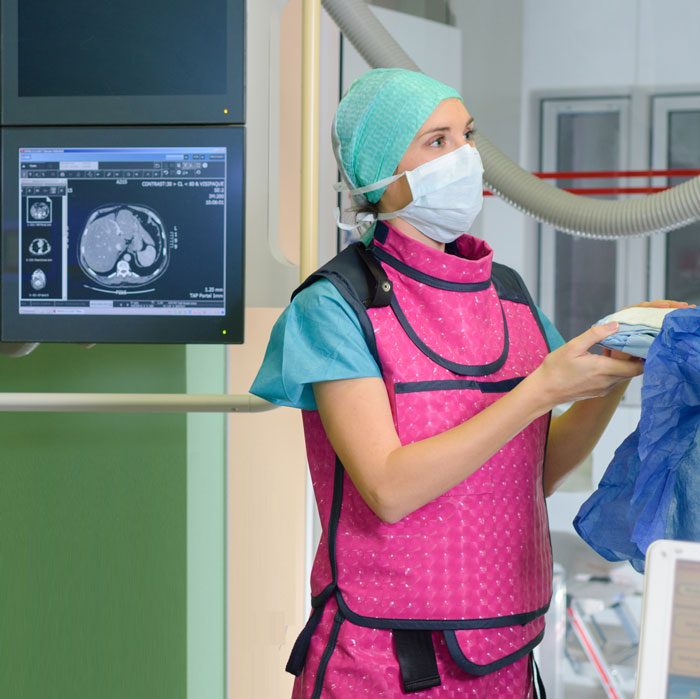
- That sufficient measures are taken each time so that work is always carried out in optimal safety conditions.
- That no person under the age of 18 should be employed in a workplace where there is a risk of radiation exposure.
- The unborn child should be protected as much as the general population, which means that pregnant persons should not be employed in a service with ionic radiation.
| Dose limits for occupationally exposed persons: | The effective dose is set at 20 MSv per consecutive sliding months |
| Dose limits for persons not occupationally exposed to ionic radiation: | The effective dose to members of the public is set at 1 MSv per year. |
| Dose limits for pupils and students: | For students aged 18 and over whose studies require them to work with certain sources, the same standards apply as those for occupational exposure. |
| An effective dose limit of 6 MSv per year applies to students aged 16 to 18 whose studies require them to work with certain sources |