



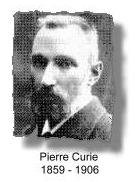
The early history of ultrasound can be traced back to 1822. A Swiss physicist, Daniel Colladen, calculated the speed of sound displacement in water. Later in 1877, Lord Rayleigh published a work titled “the theory of sound.” In it, the fundamental properties of sound waves were explained. The big breakthrough toward ultrasound was the discovery of the piezoelectric properties of certain crystals by Pierre Curie in 1880. Because of this special property of the crystals, it was now possible to emit sound waves in very high frequencies and receive them back.
The first underwater techniques were developed when the Titanic sank in 1912. The SONAR (=sound navigation and ranging) was a widely used technique in World War I, this to detect enemy submarines before they could strike.
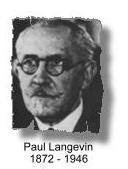
It was not until 1915 that the Russian Constantin Chilowsky, together with the French physicist Paul Langévin, developed the hydrophone that forms the basis of the medical application of ultrasound. However, these devices were mainly used in the marine world. In addition, ultrasound techniques were already used in the medical world as a therapeutic tool.
It was in the early 1940s that Austrian Karl Theodore Dussik was the first to have a diagnostic application for ultrasound. By placing a transducer along each side of the head, he succeeded in making ultrasounds of the brain to detect brain tumors…. He did not achieve much success because the bone absorbed many of the signals, but he had fitted an idea that would later have wide application.
John Julian Wild is considered by many to be the sole discoverer of ultrasound on tissues. In 1949, he published and work containing findings on unidirectional a-mode (see physics) ultrasound. He noticed that there were different patterns of the received ultrasound depending on the tissues penetrated…. His method was used to examine the breast, and abdomen.
In May 1953, John Reid and J.J.Wild made a real-time image of a 7mm tumor in a breast.
Advances in the ultrasound field continue, with the evolution of Doppler, color Doppler, 3D images, and in the near future ultrasound with contrast delivery.